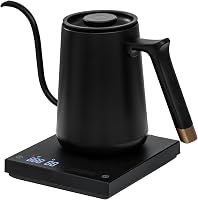
Are Electric Kettles Worth It?
Yes, an electric kettle is worth it for most people who boil water daily. It heats faster than a stovetop pot, shuts off on its own, and pours more precisely, so the main question is which type fits your routine.
On this page (7 sections)
- What makes an electric kettle worth it?
- When is an electric kettle not worth it?
- How much faster is an electric kettle than a stovetop?
- Is an electric kettle cheaper to run than a stovetop?
- What should you look for in a worthwhile kettle?
- Do electric kettles last long enough to be worth it?
- Are electric kettles worth it for you?
Yes, an electric kettle is worth it for most people who boil water daily. It heats faster than a stovetop pot, shuts off on its own, and pours more precisely, so the real question is which type fits your routine.
A kettle earns its counter space when you make tea, coffee, oatmeal or instant meals several times a week. The case gets weaker if you rarely boil water or already have a fast, well-loved stovetop kettle.
What makes an electric kettle worth it?
Speed and automatic shutoff are the two features that justify the purchase. A 1500W kettle like the Cosori heats 0.5 liters in under 3 minutes, and its boil-dry protection cuts power if the water runs out.
That combination matters more than any design detail. You fill it, press a switch, and walk away without watching a flame.
A stovetop kettle needs you to stand nearby and listen for the whistle.
Temperature control is the third reason for tea and coffee drinkers. Green tea wants water well below boiling, and a preset kettle lets you hit that mark without a thermometer.
The Cuisinart CPK-17P1 shows how far this goes: six preset heats from 160°F to 200°F, labeled for delicate tea, green tea, white tea, oolong tea, French press coffee, and black and herbal teas. You tap one button on the handle and the kettle does the rest.
For the full comparison, see electric kettle vs stove top kettle.
When is an electric kettle not worth it?
Skip one if you boil water less than once a week or have very limited counter space. An occasional pasta pot on the stove already does the job, and a kettle mostly gathers dust.
It's also a poor fit if your kitchen outlets are scarce or your counter is already crowded. Kettles need a dedicated base near an outlet, plus clearance for the lid to swing open.
The Cosori measures about 8.7 by 5.9 by 10.3 inches, so check that footprint against your free counter before you buy.
People who only ever need one mug at a time may find a stovetop kettle or a microwave just as convenient. The advantage shrinks when the volume is tiny and the cleanup is the same.
Note too that the Cosori's glass body is hand wash only, which is one more small chore if you're used to wiping a pot and moving on.
How much faster is an electric kettle than a stovetop?
Expect a meaningful gap on small volumes, and a smaller one on full pots. The Cosori heats 0.5 liters in under 3 minutes, while a stovetop kettle waits for the burner and the pot to heat first.
The difference comes from how the heat reaches the water. An electric element sits inside the water, so almost all the energy goes into heating it.
A stovetop transfers heat through the base of the pot and loses some to the air.
On a 1.7-liter fill, the gap narrows because the stove has more time to catch up. For a single cup or two, the electric kettle wins clearly.
One practical tip for either type: boil only the water you need. Filling to the max line for one mug cancels much of the speed advantage.
See our roundup of the quickest boiling electric kettles for models built around speed.
Is an electric kettle cheaper to run than a stovetop?
Per boil, an electric kettle usually costs less than a gas or electric stove. The element sends nearly all its power into the water, while a burner heats the pot and the surrounding air too.
A 1500W kettle draws about 1.5 kWh per hour of boiling. Since a liter boils in a few minutes, a day of tea costs only cents in most areas.
The exact figure depends on your electricity rate and how full you fill the kettle.
Boiling only what you need is the biggest saving. Filling to the max line for one mug wastes both time and energy, so match the water to the cups you're making.
A kettle with a clear water window makes this easy, since you can see the level as you fill. The Cuisinart has a blue backlit water window with measurement marks, which helps when you want two cups rather than a full pot.
What should you look for in a worthwhile kettle?
Start with capacity, then power, then the features you'll actually use. A 1.7-liter kettle like the Cosori or the Cuisinart suits households making several drinks; smaller kitchens do better with a compact model.
Power matters for speed. A 1500W element brings water to a boil quickly, and Cosori says its kettle reaches 0.5 liters in under 3 minutes.
Anything much lower will feel slow on a full fill.
Then decide whether you need temperature presets. Plain kettles just boil; preset models let you steep delicate tea at the right heat.
Also weigh the small conveniences: a wide lid opening for cleaning, a stay-cool handle, a removable filter. Our guide to what size electric kettle you need walks through capacity by household.
Which kettle is best for most kitchens?
The Cosori Electric Kettle is the pick for most homes. Its 9.2 score comes from a 1.7-liter glass body with no plastic in contact with the water, plus a 1500W element that heats 0.5 liters in under 3 minutes.
The wide mouth and large-angle lid make it easy to reach every corner when cleaning. It shuts off automatically within 30 seconds of a boil and has boil-dry protection as a backup.
The base runs on a mechanical steam-powered switch, and the stainless steel filter and inner lid keep scale out of your cup.
One real trade-off: the glass body is hand wash only. If you want preset temperatures for tea, this model just boils, so look at the next pick instead.
Which kettle is best for tea drinkers?
The Cuisinart CPK-17P1 PerfecTemp Kettle is the choice when tea temperature matters. Its 8.6 score reflects six preset heats from 160°F to 200°F, covering delicate, green, white, oolong and black teas plus French press coffee.
The 1.7-liter stainless steel body heats on 1500W, and one-touch controls with blue LED indicators keep the settings simple. A 30-minute keep warm holds your chosen temperature, and a memory feature keeps the kettle going if you lift it off the base for up to 2 minutes.
The trade-offs are weight and size. At about 4.8 kg it's heavier than a glass model, and the stainless body needs a wipe rather than a full wash.
It's the better pick if you brew loose-leaf tea daily.
How do you keep a kettle working well?
Descale regularly if your water is hard. The OXO Brew All-Natural Descaling Solution (7.5) is a phosphate-free option that the maker says breaks down scale without vinegar's smell.
One 14 fl oz bottle covers 3 uses and works with kettles and coffee makers alike.
Scale slows boiling and can leave a chalky film in your cup. A quarterly descale, or more often in hard-water areas, keeps the element efficient.
See our guide to the best 1-liter electric kettles if a smaller size suits you better.
Do electric kettles last long enough to be worth it?
Yes, a well-kept kettle typically serves for years. Stainless steel and glass bodies resist wear, and the main failure point is scale buildup on the element rather than the body itself.
Cuisinart backs its CPK-17P1 with a limited 3-year warranty, which says something about expected life.
Regular descaling is the simplest way to extend life. It keeps the element working at full power and prevents the sensor from tripping early.
Wiping the exterior and emptying the kettle after use also helps.
Choose a model with a removable or washable filter if you have hard water. The Cuisinart includes one, which catches scale flakes before they reach your cup.
A little upkeep goes a long way.
Are electric kettles worth it for you?
The answer is yes if you boil water most days and want speed without watching a stove. Pick the Cosori Electric Kettle for most kitchens, thanks to its fast 1500W element and glass body with no plastic touching the water.
Choose the Cuisinart CPK-17P1 if you brew tea at specific temperatures and want presets and keep warm.
Skip an electric kettle if you boil water rarely or your counter is already full. The honest test is simple: count how often you reach for a pot of hot water in a week.
If it's more than a few times, an electric kettle earns its place.
Whatever you choose, descale it now and then and boil only the water you need. That keeps the speed advantage real and answers the question, are electric kettles worth it, with a clear yes for daily use.
Frequently asked questions
How much electricity does an electric kettle use?
A 1500W kettle draws about 1.5 kWh per hour of continuous boiling. Since a liter boils in a few minutes, a daily cup costs very little.
Heating only the water you need keeps the bill lower than filling the kettle to the top each time.
Is an electric kettle faster than a microwave?
Usually yes for a full liter. A 1500W kettle puts all its power into the water, while a microwave heats unevenly and needs stirring.
For a single mug, the gap narrows, but the kettle still shuts off by itself when the water boils.
Do electric kettles use a lot of power when left plugged in?
No. A kettle only draws power while the heating element runs.
Once it boils and the switch trips, it stops.
Leaving it on the base costs nothing extra, though unplugging it is a sensible habit in homes with young children.
Can you boil anything besides water in an electric kettle?
Only if the maker says so. Most kettles are designed for water alone, and milk, soup or broth can scorch the element or trip the boil-dry sensor.
Check the manual before heating anything else, and never add ingredients to a kettle that isn't built for it.
Why does my electric kettle take longer than expected?
Scale buildup on the heating element is the usual cause. Minerals insulate the element so heat reaches the water more slowly.
Descaling with a proper solution restores speed, and filtering hard water helps slow the buildup between cleanings.