Types of Electric Kettles Explained
The main types of electric kettles are basic boil-only kettles, variable temperature kettles, gooseneck pour-over kettles, large water boilers and dispensers, and compact travel kettles. Pick the type by how you pour and whether you need exact temperatures, not by wattage alone.
On this page (8 sections)
- What are the main types of electric kettles?
- How do basic boil-only kettles work?
- When is a variable temperature kettle worth it?
- What makes a gooseneck kettle different?
- How do water boilers and dispensers fit in?
- Which type suits tea, coffee and everyday hot drinks?
- What should you check before buying any type?
- Which type should you pick?
The types of electric kettles come down to five groups: basic boil-only models, variable temperature kettles, gooseneck pour-over kettles, water boilers and dispensers, and compact travel kettles. Each type changes how you heat, pour and hold water, so the right one depends on your daily cups rather than the biggest wattage on the shelf.
A basic kettle boils water and stops. A variable temperature model lets you choose a lower setting.
Gooseneck kettles trade speed for a thin, controlled stream. Boilers keep a large tank warm all day, and travel kettles fit a bag or a desk.
This guide walks through each type, the specs that matter and the buyer each one suits. If you are still weighing corded kettles against the stovetop, our electric kettle vs stove top kettle comparison covers that first choice.
What are the main types of electric kettles?
There are five main types, sorted by how they heat and pour: basic, variable temperature, gooseneck, water boiler and travel. Most kitchen kettles fall into the first three, while boilers and travel models serve more specific jobs.
A type is more than a shape. It sets the controls you get, the temperature range, the spout design and the capacity you can expect.
That is why two kettles with the same wattage can feel completely different in daily use.
- Basic kettle: one job, boil and shut off. Simple and usually the least expensive type.
- Variable temperature kettle: choose a target heat, often in presets or one degree steps. Best for tea and coffee.
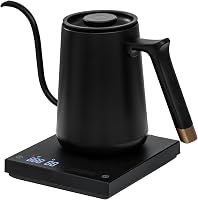
- Gooseneck kettle: a long curved spout for a slow, even pour. Built for pour-over coffee and careful tea brewing.
- Water boiler and warmer: a large tank that dispenses hot water and keeps it warm. Best for heavy daily use.
- Travel kettle: small, light and compact. Best for one or two cups away from home.
Wattage tells you how fast a kettle heats, not which type it is. A basic 1500W kettle and a variable temperature 1500W kettle boil at a similar speed; the difference is the control over temperature and the features around it.
That is the split worth understanding before you shop.
Decide by your daily habit first. If you mostly make black tea or instant drinks, a basic kettle covers it.
If you brew green tea, pour-over coffee or formula, the extra control of a variable temperature or gooseneck type earns its place.
How do basic boil-only kettles work?
A basic electric kettle heats water to boiling and switches off, with no temperature settings at all. It is the simplest and most common type, and it suits anyone who just wants hot water fast.
The design is straightforward. A heating element sits under or inside the water, a thermostat cuts the power near boiling, and a switch lets you start and stop it.
Most have a water-level window, a flip or push lid and a cordless jug that lifts off a power base.
Because there is nothing to set, there is less to go wrong and less to think about. Fill it, press the switch, and pour when it clicks off.
That speed and simplicity make it the default kettle in most kitchens.
- Best for: black tea, herbal tea, instant coffee, oatmeal, noodles, cooking water and general hot drinks.
- Not ideal for: green or white tea, where boiling water can scald delicate leaves.
- What to check: capacity, a boil-dry cutoff and a visible water gauge.
A basic kettle's weak point is temperature. It always goes to a rolling boil, so delicate teas need the water to cool in the cup first.
Some buyers accept that trade for speed and a low price tier; others move up to a variable temperature type.
If fast boiling is your main goal, our roundup of the quick boil electric kettles shows which models reach a boil soonest. A basic kettle with high wattage and a modest capacity is usually the fastest route.
When is a variable temperature kettle worth it?
A variable temperature kettle is worth it when the exact water heat changes your drink, as with green tea, white tea, oolong or pour-over coffee. It lets you set a lower temperature instead of boiling and waiting.
These kettles add a control panel, often with numbered presets or one degree steps. You choose a target, the kettle heats to it and often holds it for a set time.
That keep-warm window is handy when you brew several cups in a row.
The Cuisinart CPK-17P1 PerfecTemp is a clear example of the type. It holds 1.7 liters, runs at 1500 watts and offers six preset temperatures from 160°F to 200°F, plus a full boil setting.
The presets line up with delicate tea, green tea, white tea, oolong, French press coffee and black or herbal tea.
Its other features suit daily use: one-touch controls with blue LED indicators, a 30-minute keep warm option and boil-dry protection with auto shutoff. The jug lifts off a 360° swivel base, and a memory feature keeps the setting for 2 minutes off the base.
Choose this type if you brew more than one kind of tea or make French press coffee. A single-setting basic kettle would force you to guess the temperature every time.
The trade-off is more controls to learn and a higher price tier than a plain kettle.
Capacity matters here too. A 1.7-liter kettle like the Cuisinart fills several mugs at once; a smaller one heats faster but pours fewer cups.
Our guide to what size electric kettle do I need helps you match liters to your household.
What makes a gooseneck kettle different?
A gooseneck kettle has a long, narrow, curved spout that pours a thin, steady stream instead of a wide gush. That control is the whole point, and it is why baristas and careful tea brewers reach for one.
The narrow opening slows the flow and lets you aim water precisely at coffee grounds or tea leaves. A balanced body and a cool-touch handle help you keep the spout steady through a slow pour.
Many gooseneck kettles also offer adjustable temperature and a built-in timer.
The OXO Brew Pour Over Gooseneck shows the type well. It heats water in one degree increments from 104°F to 212°F and holds the setting for up to 30 minutes.
A built-in brew timer counts up, and the cordless jug lifts off its base for easy pouring.
Its curved spout and elongated shape give the steady flow pour-over brewing needs. Automatic shutoff powers it down after the keep warm cycle.
The 1-liter capacity suits a few cups rather than a full family pot.
Pick a gooseneck if pour-over coffee or measured tea brewing is your routine. The slow pour is a feature, not a flaw, but it does mean filling a large mug takes longer than a wide-spout kettle.
For everyday tea bags, a standard spout is quicker.
A 1-liter gooseneck sits at the small end of the range. Our roundup of the best 1 liter electric kettles covers compact models if counter space is tight.
How do water boilers and dispensers fit in?
A water boiler and warmer holds a large tank of hot water and dispenses it on demand, keeping it warm for hours. It is less a kettle and more a hot water station for homes that make cup after cup.
Instead of lifting and pouring a jug, you press a lever or button and water flows from a spout. The tank stays at a chosen temperature, so there is no wait between cups.
That suits tea drinkers, formula feeding, instant soup and anyone hosting a crowd.
The NutriChef Digital Water Boiler 5L is a good example. Its 5-liter stainless tank heats water to 203°F in minutes and offers three dispensing methods: automatic, manual and a cup switch you press with the cup.
A 360° rotating base lets you reach the spout from any angle.
It also offers adjustable keep-warm temperatures at 113°F, 131°F, 149°F, 167°F, 185°F or 203°F, so you can heat straight to a chosen warmth without boiling. A built-in LED light shows when it dispenses, and the clear water window helps you top up in time.
Auto shutoff cuts power when the tank is empty, and a dispense button lock guards against accidental pouring.
Choose this type for high volume and frequent cups. It wins when several people draw hot water all day and you want it ready without lifting a full kettle.
The trade-off is counter space: a 5-liter boiler is a fixed station, not something you tuck in a cupboard.
Which type suits tea, coffee and everyday hot drinks?
The best type depends on what you brew most often. Tea and coffee reward temperature control, while everyday hot drinks reward speed and simplicity.
Match the type to the drink, not the other way around.
| Your main use | Best type | Why it fits |
|---|---|---|
| Black and herbal tea, instant drinks | Basic boil-only kettle | Fast boil and shutoff with no settings to manage |
| Green, white and oolong tea | Variable temperature kettle | Presets or steps keep water below a rolling boil |
| Pour-over coffee | Gooseneck kettle | Narrow spout gives a slow, even pour |
| Many cups a day, family or office | Water boiler and warmer | Large warm tank dispenses on demand |
| Travel, desk or one cup | Travel kettle | Compact and light for a single serving |
For tea, the temperature split matters most. Green and white teas taste better when the water is well under boiling, while black and herbal teas want a full boil.
A variable temperature kettle handles both in one machine.
For coffee, the pour matters as much as the heat. A gooseneck spout gives you the steady stream a pour-over needs, while a wide-spout kettle floods the grounds.
If you drink drip coffee from a machine and only use the kettle for tea, a basic model is fine.
For everyday use, weigh how many cups you make at once. A 1.7-liter kettle fills a round of mugs; a 1-liter gooseneck suits one or two.
The boiler wins when the kettle would be reheated all day.
Pick by your most frequent drink. Buy the type that serves it well, then accept a small compromise on the less common use.
Most kitchens end up happiest with a variable temperature kettle or a basic model plus a gooseneck for coffee.
What should you check before buying any type?
Whatever type you choose, check four things first: capacity, material, safety features and how it pours. These basics decide whether a kettle fits your counter and your routine, whatever the controls on top.
Capacity. A 1-liter kettle suits one or two people; 1.5 to 1.7 liters fills several cups; a boiler holds 5 liters or more.
Match liters to how many cups you pour before refilling.
Our size guide breaks this down by household.
Material. Stainless steel interiors resist odors and are easy to wipe.
Glass lets you watch the water and looks good on the counter.
Plastic bodies are light and often budget-friendly. Check that the interior and any filter are easy to reach.
Safety features. Look for boil-dry protection and auto shutoff on every type.
A cool-touch or stay-cool handle, a secure lid and a locking dispense button on boilers all add peace of mind.
A 360° base makes the jug easy to set down from any angle.
Pouring. A wide spout pours fast for filling mugs and pots; a gooseneck pours slow and precise.
A dripless spout keeps the counter dry.
Think about the pour you do most, because it affects daily use more than any other feature.
Also check the controls you will actually touch. One-touch buttons and clear indicators are easy for anyone to use; a digital panel with presets takes a little learning but rewards tea and coffee drinkers.
A keep-warm timer is worth having if you brew several cups in a row.
Finally, think about the space. Measure the footprint and the height under your cabinets before buying, especially for a boiler.
A kettle you have to move every time you use it soon becomes a chore.
Which type should you pick?
The right type for most people is a variable temperature kettle or a basic kettle, depending on whether exact heat matters to your drinks. Buy a gooseneck only if pour-over coffee is a regular habit, and a boiler only if you draw hot water all day.
Here is the decision in plain terms:
- Pick a basic kettle if you mostly make black tea, herbal tea, instant coffee or cooking water and want the fastest, simplest route to a boil.
- Pick a variable temperature kettle if you brew green, white or oolong tea or French press coffee and want the heat set for you.
- Pick a gooseneck kettle if a slow, steady pour is part of your coffee or tea routine.
- Pick a water boiler if several people draw hot water through the day and you want it warm and ready without lifting a jug.
- Pick a travel kettle if you mostly make one or two cups and need something compact.
For a first upgrade from a plain kettle, the Cuisinart CPK-17P1 PerfecTemp covers the widest range of drinks: six presets, a 1.7-liter capacity and a 30-minute keep warm. It handles delicate tea and French press coffee in one machine, so you do not need a second kettle for either.
If pour-over coffee is the main event, the OXO Brew Pour Over Gooseneck earns its place with one degree temperature control and a spout built for a measured pour. For a busy family or office, the NutriChef Digital Water Boiler 5L turns hot water into a station you draw from all day.
The types of electric kettles are not ranked from best to worst; they are tools for different habits. Name the drink you make most, then buy the type that serves it.
That single choice will do more for your daily cups than any extra feature.
If you are still deciding between a plug-in kettle and a stovetop pot, our electric kettle vs stove top kettle comparison is the next read. For speed, see the quick boil models; for a compact pour-over setup, the best 1 liter kettles.
Frequently asked questions
What is the most common type of electric kettle?
The basic boil-only kettle is the most common type. It heats a full pot to boiling and shuts off, with no temperature settings, which suits tea bags, instant drinks and cooking water.
Do I need a variable temperature kettle for green tea?
A variable temperature kettle helps with green tea because you can set water well below boiling instead of letting it cool in the cup. If you mostly drink black tea or instant coffee, a basic kettle is enough.
Is a gooseneck kettle only for pour-over coffee?
No. A gooseneck kettle works for tea and any brewing where a slow, steady stream matters, though the narrow spout pours more slowly than a standard kettle.
Its main advantage is control, not coffee exclusivity.
What is a water boiler and warmer compared with a kettle?
A water boiler and warmer holds a large tank of hot water and dispenses it on demand, keeping it warm for hours. A kettle heats a smaller batch and pours from its own body, so the boiler suits frequent cups rather than occasional boiling.
Can I use a travel kettle at home?
Yes, a compact travel kettle works at home for one or two cups, but its small capacity makes it slow for a family. Check that its voltage and plug suit your outlets before relying on it.