Can I Make Coffee in an Electric Kettle?
Yes, you can make coffee with an electric kettle by heating water in it, then pouring that water over coffee grounds in a separate brewer. Don't put coffee grounds or brewed coffee inside the kettle.
On this page (7 sections)
- Can I make coffee in an electric kettle?
- What should you avoid putting in the kettle?
- What water temperature works for coffee?
- Does a gooseneck kettle help with pour-over coffee?
- Which kettle features matter most for coffee?
- How do you make pour-over coffee with a kettle?
- Which electric kettle is right for making coffee?
Yes, you can make coffee with an electric kettle by heating water in it, then pouring the water over coffee grounds in a separate brewer. Keep grounds and brewed coffee out of the kettle, which is designed to heat water.
For pour-over, a kettle with temperature control and a steady spout can make pouring easier. A standard electric kettle still works if you heat the water and pour carefully.
Can I make coffee in an electric kettle?
Yes, use the kettle to heat water, not to brew the coffee. Add ground coffee to a separate brewer, such as a pour-over dripper or French press, then pour hot water over it.
Putting coffee grounds directly into a kettle can leave residue and make cleaning harder. Adding brewed coffee to a kettle can also leave a film that affects the taste of water you heat later.
For a basic pour-over, place a filter and grounds in the dripper, set it over a mug or carafe, and slowly pour hot water over the grounds. Follow the recipe for your coffee's grind, water amount, and pour pattern.
Can you make coffee in an electric kettle without a coffee maker?
Yes, if you have a separate way to hold and filter the grounds. A pour-over dripper is one option, while a French press steeps grounds before you press them down.
A kettle alone doesn't separate grounds from brewed coffee. If you don't have a brewer, look for a method that keeps the grounds out of the kettle and that you can clean safely.
What should you avoid putting in the kettle?
Use clean water only unless your kettle's instructions say otherwise. Avoid adding coffee grounds, brewed coffee, milk, or other ingredients that can leave residue or make the kettle harder to clean.
Grounds can settle around the bottom and may be difficult to rinse away. Coffee oils can also cling to interior surfaces.
Check the care instructions for your kettle before cleaning it, and don't assume a kettle can be cleaned like a cooking pot.
If your kettle has mineral buildup from water, our guide to white buildup in an electric kettle explains what it is and how to handle it. For a cleaning method, see how to clean an electric kettle with vinegar.
What water temperature works for coffee?
Start with the temperature recommended by your coffee recipe. Many pour-over recipes use water around 195°F to 205°F, but the ideal setting varies with the coffee and brewing method.
A kettle with adjustable temperature settings lets you choose a target directly. If you have a kettle that only boils water, you can let the water cool briefly before pouring, though this is less precise.
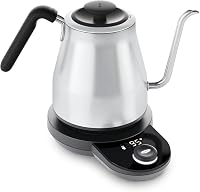
The OXO Brew Pour Over Gooseneck Kettle heats water from 104°F to 212°F in one-degree increments and can hold a setting for up to 30 minutes. Its built-in timer can help you keep track of a pour-over brew.
A precise temperature setting can be useful if you follow recipes with different water temperatures. For more choices, browse our guide to electric tea kettles with temperature control.
Does a gooseneck kettle help with pour-over coffee?
A gooseneck spout gives you more control over the water stream. That can help you pour steadily over grounds, but a gooseneck kettle isn't required to make coffee.
The Cosori Gooseneck Kettle 0.8L has five temperature presets and a hold function that keeps water warm for up to 1 hour. Its maker describes the spout and handle as designed for controlled pouring.
Its 0.8 L capacity is suited to smaller batches. If you want to compare more spout shapes and temperature features, see the best gooseneck kettles for pour-over coffee.
Which kettle features matter most for coffee?
Choose features that match how you brew: temperature control for repeatable settings, and a controlled spout for pour-over. For other brewing methods, a gooseneck spout may matter less.
The Fellow Stagg EKG Pro has a 0.9 L capacity, to-the-degree temperature control, a high-resolution LCD screen, and a precision spout. Those features fit someone who wants more control over pour-over water.
Think about how much water you typically heat and whether you want it to stay warm. If you prefer a standard kettle, compare electric kettles for boiling water every day.
For a kettle interior without plastic contact with water, see electric kettles with no plastic inside. Check the care instructions for any kettle you consider, especially if you plan to use it every day.
How do you make pour-over coffee with a kettle?
Heat fresh water, prepare the grounds in a separate dripper, then pour slowly over them. Use the water temperature and amount your recipe calls for.
- Add a filter and ground coffee to a pour-over dripper.
- Heat water in the kettle, using a recipe's temperature if available.
- Pour water over the grounds in a slow, steady stream.
- Let the coffee drain into a mug or carafe.
A gooseneck spout can make the pour easier to control. A regular kettle can also work if its stream is manageable and you pour carefully.
Which electric kettle is right for making coffee?
If you want adjustable temperature and a timer, consider the OXO. If you want presets and a longer keep-warm period, the Cosori offers five temperature settings and up to 1 hour of holding.
If you want a precision spout with to-the-degree control and an LCD, consider the Fellow.
Any of these can heat water for coffee, but none replaces the brewer. Keep coffee grounds and brewed coffee out of the kettle, then choose the spout and temperature features that suit your routine.
For more options, start with our gooseneck kettle guide for pour-over coffee.
Frequently asked questions
Can you put coffee grounds in an electric kettle?
No. Keep coffee grounds out of an electric kettle and brew them in a separate device, such as a pour-over dripper or French press.
Grounds can leave residue and clog parts of the kettle.
Heat clean water in the kettle, then pour it over the grounds in your brewer.
Can I boil coffee in an electric kettle?
It's better to heat water in the kettle and brew coffee outside it. Boiling brewed coffee can leave residue, affect the taste of later water, and make cleanup harder.
Follow your kettle's care instructions and use a separate pot or brewer if you want to heat prepared coffee.
What temperature should kettle water be for coffee?
A common starting point for pour-over coffee is water around 195°F to 205°F, though the right temperature depends on the coffee and recipe. A temperature-control kettle can help you choose a setting.
If your kettle only boils water, let it cool briefly before pouring.
Is a gooseneck kettle necessary for making coffee?
No. A regular kettle can heat water for coffee, and any clean kettle can pour it into a brewer.
A gooseneck spout gives you more control over the stream, which can help when you pour slowly over grounds for pour-over coffee.