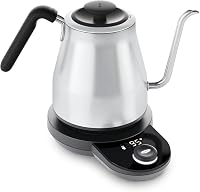
How Do Cordless Electric Kettles Work?
A cordless electric kettle works by drawing power through metal contacts in its base, which touch matching rings on the bottom of the kettle when it sits down. The base stays plugged in, the kettle lifts off for pouring, and a thermostat switches the power off at a boil.
On this page (10 sections)
- How does a cordless electric kettle get power without a cord?
- What happens inside the kettle when you switch it on?
- How does the kettle know when the water has boiled?
- What is the 360° base connector and why does it matter?
- Where does the cord go, and how do you fill and pour?
- Is a cordless electric kettle safe?
- Which kettle fits how you boil water?
- How do cordless kettles compare with corded kettles and stovetop pots?
- What wears out first on a cordless kettle?
- Quick answers to how cordless electric kettles work
A cordless electric kettle works by passing power from a plugged-in base up through metal contacts into the kettle body. The pot has no cord of its own, so you lift it off, pour, and set it back down to boil again.
That split design is the whole trick, and it explains most of what people notice about these kettles. The base does the wiring, the kettle does the heating, and a pair of contacts between them makes and breaks the connection every time you lift the pot.
How does a cordless electric kettle get power without a cord?
The base carries the cord and the power, while the kettle carries only the heating element. A 360° connector in the base holds spring-loaded pins that press against flat rings on the underside of the kettle.
When the kettle sits down, its weight closes the contact and current flows to the concealed element. Lifting the pot separates the pins from the rings and cuts the circuit at once.
The Cuisinart JK-17P1 uses exactly this setup, with a 360° swivel base that suits left- and right-handed users and a lift-off base that stays cool on the table.
The 360° part matters more than it sounds. You can drop the kettle onto the base at any angle and the contacts still line up, so there is no fumbling for a notch in the dark before your first coffee.
What happens inside the kettle when you switch it on?
Current runs through a heating element under the water, and the water heats by direct contact. The element sits in a metal plate or a coil at the bottom of the pot, hidden beneath a stainless or glass floor.
Heat moves into the water by conduction and then by convection, as warm water rises and cooler water sinks to the bottom. That circulation is why a full kettle boils fairly evenly and why the base of the pot never needs to be stirred.
The Cosori Electric Kettle puts its 1500 watts into an element sealed below a stainless steel floor. Cosori says no plastic touches the water, so the plate and filter do all the work in contact with the liquid.
How does the kettle know when the water has boiled?
A steam sensor trips a thermostat that cuts the power. As the water reaches a rolling boil, steam rises and travels up a small channel in the handle or lid.
The steam hits a bimetallic strip that bends with the heat and opens the switch.
That is why the kettle clicks off a moment after the boil starts rather than running dry. Cosori's mechanical shut-off sends steam through a channel in the handle and cuts power within 30 seconds of a full boil.
It also warns against tilting the kettle backward, since water can reach the channel and trip the switch too early.
Boil-dry protection is the second safety layer. A separate thermostat senses when the element gets hotter than water alone would allow and shuts the kettle down before it overheats.
Both the Cuisinart and Aarke kettles list this protection.
What is the 360° base connector and why does it matter?
The connector lets the kettle land at any angle and still make contact. Instead of a plug, the base uses concentric metal rings with a center pin, and the matching parts on the kettle slide over them as you set the pot down.
The practical result is that the kettle works with either hand. You can also leave the base in one spot on the counter and turn the spout toward the cups you're filling.
Aarke builds the base to double as cord storage, so the coiled cord tucks underneath rather than trailing across the counter.
The connector also keeps the cord away from the water. Since the live cord stays with the base, the only electrical parts near the water are the low-profile contacts on the kettle's base, which sit flat and dry when the pot is lifted.
Where does the cord go, and how do you fill and pour?
The cord stays with the base, so the kettle itself never needs unplugging to fill or pour. You lift the pot by its handle, take it to the tap, and set it back on the base when it's full.
Most kettles open with a lid button or a hinged lid. The Cuisinart JK-17P1 has an easy-open lid and a blue backlit water window with level marks, so you can see how full it is without lifting the lid.
Its dripless pour spout with a splash guard helps when you're pouring into a narrow cup.
The 360° base lets you set the kettle down in the same spot every time. For fill-and-pour habits, that's the main everyday difference from a corded kettle or a stovetop pot.
Is a cordless electric kettle safe?
Yes. The kettle is only live while it sits on its base and the switch is on.
Lift it and the contact opens, so the heating stops before the water leaves the base.
Three features carry most of the safety job. The base's spring pins and the kettle's flat rings keep the connection inside a recessed area, away from the spout.
The steam shut-off prevents a boil from running on. And boil-dry protection covers the case where someone switches on an empty kettle.
Handling still matters. Keep the water below the maximum line, set the pot down level so the contacts seat properly, and let it cool before cleaning.
The Cuisinart has a stay-cool nonslip handle and a cool-touch base, while Aarke's double-wall body keeps the outside safe to touch while the water stays hot.
Which kettle fits how you boil water?
The Cosori is the easiest pick for most kitchens, with 1.7 liters of capacity and a metal floor under the water. It heats 0.5 liters in under 3 minutes, and Cosori says no plastic contacts the water.
That makes it the kettle to choose if you fill several cups at once and want the base to stay put on the counter.
The Cuisinart JK-17P1 is the pick for a classic stainless look and a wide water window. Its 1.7 liter pot matches the Cosori for capacity and also runs at 1500 watts.
The 360° base, removable scale filter and auto shutoff make it a solid second choice for a busy family counter.
The Aarke Kettle 1.2L suits tea drinkers who want temperature control. Its settings run from 104°F to 212°F, and the double-wall body keeps heat in and the outside cool.
It holds less water than the other two, so it fits best where you boil smaller amounts at a time.
How do cordless kettles compare with corded kettles and stovetop pots?
A cordless kettle is the easiest of the three to live with day to day, because the base stays plugged in and the pot lifts free. A corded kettle works the same way but needs unplugging before you carry it to the sink.
A stovetop kettle needs a burner and a separate heat source.
Corded kettles still make sense if you always boil in the same spot and don't mind the cord. Stovetop kettles suit gas or induction kitchens where counter space is tight.
Our comparison of an electric kettle vs stove top kettle covers speed, control and cleanup in more detail.
If boil speed is your main concern, a quick boil electric kettle in the 1500 watt range will beat most stovetop kettles and corded models of the same power. And if you're wondering whether your kettle can do more than tea, can I make coffee in electric kettle explains where a kettle works for brewing and where it doesn't.
What wears out first on a cordless kettle?
The base contacts and the heating element are the parts most likely to fail first, along with the scale filter if the water is hard. The contacts can corrode or lose their spring over years of daily use.
A kettle that heats slowly or clicks off early often has a scaled element or a sticking thermostat.
Cleaning helps more than anything else. Descale with vinegar or lemon juice and water every few weeks if your water is hard, and wipe the base contacts dry after any spill.
A removable filter like the Cuisinart's is easy to rinse, while the Aarke's wide opening and hidden element make the inside simple to reach.
How long these parts last depends on use and water quality. Our guide to how long do electric kettles last explains the signs of a failing element or base and when a repair stops making sense.
Quick answers to how cordless electric kettles work
The base is the power source and the kettle is the heating vessel, joined by metal contacts that break when you lift the pot. That's why you can fill at the sink, pour at the cup, and set the kettle down without touching a cord.
Pick the Cosori for capacity and a metal floor under the water, the Cuisinart for a stainless look with a wide water window, or the Aarke for temperature settings in a smaller pot. If you're deciding between a cordless kettle and the stove, the cordless kettle buying basics in our comparison will help you settle it.
Frequently asked questions
How do cordless electric kettles work without a cord on the pot?
The base holds the cord and the power connection. Spring-loaded pins in the base press against contact rings on the bottom of the kettle, so electricity flows while the pot sits down.
Lift the pot and the circuit breaks instantly, which is why you can pour without unplugging anything.
Is it safe to lift a cordless kettle while it is still heating?
Yes. Lifting the kettle breaks the power contact the moment the base loses connection, so the element stops heating before the water leaves the base.
The kettle switches back on when you set it down, unless your model needs the switch pressed again.
Why does my cordless kettle stop boiling when I set it down?
A steam sensor in the handle or lid has tripped. When water boils, steam travels up a channel and hits a thermostat that cuts the power.
If the kettle is tilted backward or overfilled, water can reach that channel and trip the switch early, so keep it below the maximum line and set it down level.
Do cordless kettles boil slower than corded ones?
No, not on a 120 volt outlet. Both types run the same kind of heating element and draw similar wattage, so the base contacts add no real delay.
A 1500 watt kettle heats 0.5 liters in under 3 minutes either way, which is faster than most stovetop kettles.
Can you leave a cordless kettle on its base all the time?
Yes. The base only sends power when the kettle is switched on and the safety thermostat allows it.
Kettles cut the current at a boil and again if the pot runs dry, so resting on the base is normal.
Unplug the base for long storage or when cleaning around it.