Can You Leave Water in a Kettle?
Yes, you can leave water in a kettle briefly between uses, but empty it if it will sit for days or if it looks, smells, or tastes off. Follow your kettle's care instructions and refill with fresh water before boiling.
On this page (8 sections)
- Can you leave water in a kettle overnight?
- How long can water sit in an electric kettle?
- Should you empty a kettle after every use?
- Does leaving water in a kettle make it unsafe?
- Does water left in a kettle cause limescale?
- How do you store a kettle between uses?
- What should you do with water that's been sitting for days?
- When should you leave water in a kettle?
Yes, you can leave water in a kettle briefly between uses, but empty it if it will sit for days or if it looks, smells, or tastes off. For better-tasting tea or coffee, start with fresh water and follow your kettle's care instructions.
A clean kettle with water left overnight usually doesn't need special treatment. If the water has been sitting longer, drain it, check the interior, and refill with fresh water before boiling.
Can you leave water in a kettle overnight?
Water left overnight in a clean kettle is usually fine to reboil. Pour it out if it has an unusual smell, taste, or appearance, and check your manual for any model-specific instructions.
Some people notice that repeatedly reheated water tastes flat. If taste matters to you, empty the kettle after use and heat only what you need next time.
A kettle's keep-warm mode is different from simply leaving water inside. If your appliance actively holds water at a set temperature, use the instructions for that feature rather than assuming it is meant to run continuously.
How long can water sit in an electric kettle?
There isn't one time limit for every kettle and water source. A short pause between drinks is different from leaving water unused for several days, so use the water's appearance and smell, your kettle's condition, and its manual as guides.
If the kettle will sit for days, empty it and let the interior air dry if the manual allows. This also makes it easier to spot mineral marks or debris before the next use.
Don't use water that looks cloudy or has particles floating in it. Drain the kettle, inspect and clean it as directed, then refill with fresh water.
Should you empty a kettle after every use?
You don't need to drain a clean kettle after every use, but doing so can help keep the water fresh. It also leaves less standing water to evaporate and expose minerals on the interior.
If you make several drinks in one day, keeping water in the kettle between uses can be convenient. Empty it when you're done for the day, especially if you won't use it again soon.
For a dispenser designed to keep a larger supply hot, the Zojirushi CD-LFC40 has a 4 L capacity and four keep-warm settings: 160°F, 175°F, 195°F, and 208°F.
This is a larger countertop appliance than a standard kettle, so check its dimensions and capacity against your available space and typical use. Its optional Quick Temp mode keeps water warm directly at certain settings without first bringing it to a boil.
Does leaving water in a kettle make it unsafe?
Water sitting in a clean, closed kettle for a short time is not automatically unsafe. Discard it if you see debris or cloudiness, or notice an unusual smell or taste; clean the kettle before using it again.
Keep the lid closed when the kettle is idle, and don't leave it where dust or other material can fall inside. If the inside is visibly dirty, follow the cleaning steps in the manual.
Reboiling does not remove dirt or make questionable water suitable to drink. Start with fresh water and clean the kettle if anything seems wrong.
Can you reboil water left in an electric kettle?
Yes, you can generally reboil water that has been sitting in a clean kettle. It may taste less fresh than newly poured water, so replace it if you notice an off taste or smell.
Don't rely on boiling to deal with visible residue or a dirty kettle. Empty it, clean it according to the manual, and refill with fresh water.
For step-by-step basics, see how to use an electric kettle. If you want to compare different heating methods, our guide to an electric kettle vs a microwave covers the main differences.
Does water left in a kettle cause limescale?
Standing water can leave mineral residue as it evaporates, but scale also forms during normal boiling. Hard water tends to leave more visible mineral deposits than softer water.
Drain leftover water when convenient, and inspect the bottom and sides of the kettle regularly. White, chalky marks are common mineral buildup; our guide to white buildup in an electric kettle explains what it is and how to respond.
Descale when you see buildup, using a method the kettle's manual allows. OXO Brew Descaling Solution is made for kettles and other home appliances, and OXO says it breaks down scale without vinegar's smell.
Use the amount and process on the bottle and your kettle's care instructions. For a vinegar method, see how to clean an electric kettle with vinegar.
How do you store a kettle between uses?
Empty the kettle if you won't use it for several days, then let it dry as its manual allows. Keep it clean and store it in a dry spot with the lid open only if the instructions permit.
Avoid immersing the base, cord, or electrical parts in water. Don't use abrasive tools or cleaning products unless the manual says they're safe for the kettle's interior.
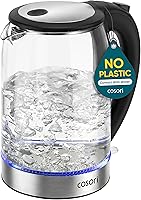
A kettle with temperature settings may suit readers who want to heat water for different drinks. The Cosori Stainless Temperature Kettle 1.7L has five presets and adjustable temperature control, and its interior is stainless steel with no plastic parts in contact with the water.
To choose a kettle around your routine and kitchen, read how to pick the right electric tea kettle. If you're comparing variable-temperature options, see electric tea kettles with temperature control.
What should you do with water that's been sitting for days?
If the water has been sitting for days, pour it out and refill with fresh water. Check for visible residue or an unusual smell before using the kettle again.
If the interior looks clean, follow the normal instructions for filling and boiling. If you see scale or grime, clean or descale it as the manual directs.
For a kettle that remains unused for a long stretch, empty it and let it dry fully before storage. See how long electric kettles last for care habits that can help you decide when maintenance or replacement deserves attention.
When should you leave water in a kettle?
Leave water in a clean kettle for a short time if you'll use it again soon, and empty it when it will sit for days or taste stale. Fresh water is a simple choice when flavor matters, while regular inspection and descaling help you catch residue.
Pick a water boiler if you want a larger supply held warm, or a standard kettle if you mainly boil water when needed. For upkeep, start with what white buildup in an electric kettle means and clean only as your manual allows.
Frequently asked questions
Can you leave water in an electric kettle overnight?
Usually, water left overnight in a clean kettle is fine to reboil if it looks and smells normal. For the freshest taste, pour out what you don't need and refill before use.
Follow your kettle's manual, especially if it has a keep-warm function or care instructions for standing water.
Should you empty an electric kettle after every use?
You don't have to empty a clean kettle after every use, but draining leftover water helps limit stale tastes and lets the interior dry. If you won't use it for a few days, empty it and leave it open to air dry as the manual allows.
Is it safe to reboil water left in a kettle?
Water left in a clean kettle can generally be brought to a boil again, but reboiling won't remove dirt or fix an unpleasant smell or taste. Discard water that looks cloudy, has debris, or smells unusual, then clean the kettle according to its manual.
Does leaving water in a kettle cause limescale?
Leaving water in a kettle can contribute to mineral residue as water evaporates, especially in hard-water areas. Emptying the kettle after use may reduce standing residue, but it won't prevent scale from forming during boiling.
Descale when buildup appears and follow the maker's instructions.