How to Use an Electric Kettle, Step by Step
To use an electric kettle, fill it with fresh water between the minimum and maximum marks, place it on its base, and switch it on. Let it shut off, then lift and pour carefully.
On this page (8 sections)
- How do you use an electric kettle step by step?
- How much water should you put in an electric kettle?
- How do you choose a temperature on an electric kettle?
- How do you know when the water is ready?
- How do you pour from an electric kettle safely?
- What should you do after using an electric kettle?
- Which electric kettle can make everyday use simpler?
- What is the simple routine for using an electric kettle?
To use an electric kettle, add fresh water within the marked fill limits, set the kettle on its base, and switch it on. Wait for it to stop heating, then lift it by the handle and pour slowly.
Check your model's manual before the first use. Kettle controls and cleaning steps vary, but filling, heating, and careful pouring are the basics.
How do you use an electric kettle step by step?
Fill, position, heat, and pour in that order. Keep the kettle on a stable, dry surface and follow its manual if its controls work differently.
- Check that the kettle and base are clean and dry.
- Open the lid and fill with fresh water between the minimum and maximum marks.
- Close the lid, then place the kettle on its base.
- Select a temperature if the kettle offers settings, or start the boil cycle.
- Wait for the kettle to stop heating before lifting it.
- Hold the handle, pour carefully, and switch off or return the kettle to its base as instructed.
Keep the spout pointed away from you while pouring, and watch for steam near the lid. Don't touch the hot interior or heating plate.
If the kettle has a removable filter, leave it in place during use unless its instructions say otherwise. Some filters are designed to catch mineral flakes as you pour.
How much water should you put in an electric kettle?
Use enough water for what you need, but stay between the kettle's minimum and maximum marks. The marks help you avoid heating too little or filling beyond the designed limit.
Don't cover the base or immerse the kettle in water. If the outside gets wet, dry it before placing it on the electrical base.
For one cup, fill only to a level allowed by the kettle's minimum mark. For several servings, measure the water you need so you don't boil more than necessary.
Can you use an electric kettle without a minimum fill mark?
If you can't find a minimum mark, check the manual for the allowed fill amount. Don't guess from the shape of the kettle or run it nearly empty.
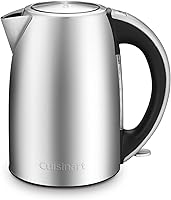
Some models have a water window with measurement lines. On the Cuisinart PerfecTemp, the blue backlit window has measurement marks, and the kettle has a 1.7-liter capacity.
The Cuisinart also has one-touch controls, a 30-minute keep-warm option, and boil-dry protection with auto shutoff. Those features can help with repeat use, but follow the manual's fill and operating instructions.
How do you choose a temperature on an electric kettle?
Choose a preset that matches your drink if the kettle has temperature controls. If it has only a boil switch, heat the water to a boil and let it cool as needed for your recipe.
Temperature presets can save a step for tea and coffee. For example, the Cuisinart CPK-17P1 has six presets ranging from 160°F to 200°F, plus a boil setting.
Check the drink or tea instructions when temperature matters. A preset label is a starting point, and steeping directions may vary by tea and preference.
Does an electric kettle need to boil for every drink?
No. Use a temperature setting below boiling when your kettle offers one and your drink calls for it.
If the kettle only boils, you can let the water cool before pouring.
Don't add tea leaves, coffee grounds, milk, or other ingredients to a standard kettle unless its manual says it is designed for them. Heating water alone makes the kettle easier to use and clean.
For tea-specific guidance, see electric kettles with temperature control. If you're making coffee, our guide to using an electric kettle for coffee explains what to consider.
How do you know when the water is ready?
Wait until the kettle's heating cycle ends or its indicator shows that it has switched off. Avoid opening the lid to check while water is heating, since steam can escape.
Some kettles switch off automatically after boiling. Others may have a keep-warm mode or temperature controls, so check the manual to understand the lights and buttons.
If you're wondering how long to wait, it depends on the amount of water and the kettle. See how long an electric kettle takes to boil for more on boil time.
How do you pour from an electric kettle safely?
Lift the kettle by its handle and pour slowly, keeping your hands and face clear of the steam. Use a stable mug or pot on a flat surface.
Don't pour while the kettle is still heating. Keep the cord and base away from water, and don't tilt the kettle backward if its manual warns against it.
A cordless kettle can be lifted from its base for serving. The Cuisinart CPK-17P1 uses a 360-degree swivel connector base and a stay-cool nonslip handle, according to its product details.
If the kettle is heavy when full, pour smaller amounts or use a smaller kettle. See what size electric kettle you need for help matching capacity to your routine.
What should you do after using an electric kettle?
Switch it off or return it to its base as directed, then let it cool before cleaning or storing. Emptying leftover water can help limit mineral buildup and avoid keeping old water in the kettle.
Wipe the outside with a soft cloth and keep the base dry. Don't submerge the kettle or put it in a dishwasher unless the manufacturer says that is safe.
Minerals in water can leave a white or chalky layer inside the kettle. Learn what causes white buildup in an electric kettle and how to remove it.
How often should you descale an electric kettle?
Descale when you see mineral buildup or when your manual recommends it. The timing depends on how often you use the kettle and the mineral content of your water.
OXO Brew Descaling Solution is made for kettles and other home appliances, and its maker says it breaks down scale without vinegar's smell. Use only as directed, then rinse the kettle thoroughly.
For a household method, read how to clean an electric kettle with vinegar. Check your kettle's care instructions before using vinegar or a descaling solution.
Which electric kettle can make everyday use simpler?
Pick a kettle with controls that match what you heat most often. A basic boil switch suits hot water for instant meals, while temperature presets can help if you make drinks that call for different heat levels.
The Cosori 1.7L Kettle has a wide opening and a large-angle lid, which can make it easier to reach inside for cleaning. It has automatic shutoff and boil-dry protection, and its instructions describe an auto shutoff within 30 seconds after water reaches a boil.
Cosori says water does not contact plastic inside this kettle. Its capacity is 1.7 liters, and it is intended for boiling water and preparing tea, coffee, and instant meals.
Choose based on the features you'll use, not on a longer feature list alone. For more options, compare electric tea kettles and consider whether temperature control or an easy-to-clean opening matters more to you.
What is the simple routine for using an electric kettle?
When deciding how to use an electric kettle, fill within the marks, heat only water, wait for the cycle to finish, and pour with care. The manual takes priority for model-specific controls, fill limits, and cleaning.
Choose the Cuisinart if marked measurements and preset temperatures suit your routine. Choose the Cosori if access for cleaning and no plastic contact with water are priorities, and use a descaling solution only when scale appears or care instructions call for it.
For the next step, see how to clean an electric kettle with vinegar, or learn whether you can leave water in a kettle.
Sources
Frequently asked questions
Should I fill an electric kettle to the top?
No. Fill it between the minimum and maximum marks, using enough water for your drink without passing the maximum line.
Too little water can trigger boil-dry protection or conflict with the manual's instructions, while overfilling can send hot water out of the spout as it boils.
Do you put water in an electric kettle before turning it on?
Yes. Add water before switching the kettle on, and keep the water within its marked limits.
Starting an empty kettle can trigger boil-dry protection, but don't rely on that feature as a normal way to use the appliance.
Can you leave water in an electric kettle?
You can leave water in some kettles, but emptying it after use can reduce mineral deposits and stale-tasting water. Follow the care instructions for your model, and avoid leaving water inside for long periods if you won't use it.
How do you clean an electric kettle?
Unplug the kettle and let it cool, then clean it as its manual directs. For mineral scale, use a descaling method approved for the model, rinse thoroughly, and dry the outside.
Keep the base and electrical connection dry.