How Much Electricity Does a Kettle Use?
A kettle uses electricity based on its wattage and how long it heats. A 1,500-watt kettle running for 4 minutes uses about 0.1 kilowatt-hour.
On this page (8 sections)
- How much electricity does a kettle use per boil?
- How do you calculate a kettle's electricity use?
- How much does it cost to boil a kettle?
- Does heating more water use more electricity?
- Does a kettle use electricity after it boils?
- What habits can reduce kettle electricity use?
- How much electricity does a kettle use over a month?
- How much electricity should you expect a kettle to use?
A kettle's electricity use depends on its wattage and the number of minutes it heats. For example, a 1,500-watt kettle running for 4 minutes uses about 0.1 kilowatt-hour (kWh).
To estimate your own use, multiply the kettle's power in kilowatts by its heating time in hours. Then multiply the kWh by your electricity rate to estimate the cost.
How much electricity does a kettle use per boil?
A 1,500-watt kettle running for 4 minutes uses about 0.1 kWh. The calculation is 1.5 kilowatts × 4/60 of an hour.
That figure describes one example, not every kettle or boil. Heating more water, starting with colder water, or using a kettle with a different wattage changes the time and energy used.
A kettle marked 1,500 watts draws up to 1.5 kilowatts while its heating element is on. It doesn't use that amount for a full hour during a short boil.
How do you calculate a kettle's electricity use?
Use kilowatts × hours = kilowatt-hours. Convert the kettle's wattage to kilowatts by dividing by 1,000, then convert minutes of heating to a fraction of an hour.
For example, a 1,500-watt kettle running for 3 minutes uses about 0.075 kWh: 1.5 × 3/60. At 6 minutes, it uses about 0.15 kWh.
For a closer estimate, time a typical boil and use the kettle's stated wattage. The heating element may cycle or turn off before the time you expect, so the estimate is approximate.
Does a higher-wattage kettle use more electricity?
A higher-wattage kettle uses electricity at a faster rate while heating, but it may boil water sooner. Compare the energy used for the same amount of water, since both wattage and run time affect the total.
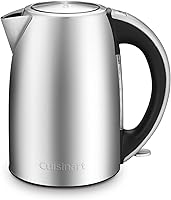
The Cuisinart JK-17P1 has a stated power of 1,500 watts and a capacity of 1.7 liters. Its automatic shutoff stops heating after boiling, which can help avoid leaving a basic kettle running.
The kettle also has a water-level window with markings. Fill it with the amount you need, while staying within its fill limits.
How much does it cost to boil a kettle?
The cost depends on the kWh used and your electricity rate. Multiply the estimated kWh for one boil by the price you pay per kWh.
If your example boil uses 0.1 kWh and your rate is 20 cents per kWh, the estimated cost is 2 cents. Replace that rate with the one on your bill, since electricity prices vary by location and plan.
To estimate a daily total, multiply the cost of one typical boil by the number of boils you make. For monthly use, multiply the daily estimate by the number of days in your billing period.
These are estimates. Your actual use changes with water volume, starting temperature, kettle condition, and heating time.
Does heating more water use more electricity?
Heating more water generally takes more energy because the kettle must raise the temperature of a larger amount of water. Filling only what you need can reduce unnecessary heating.
Use the fill markings to measure water, and check the minimum and maximum lines in the manual. Don't run a kettle below its minimum mark, which could damage it.
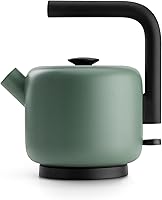
For a larger household or frequent refills, the 1.7-liter Cuisinart can hold more water than the 1.5-liter Fellow Clyde. That capacity may be useful when several people need hot water at once, though heating the full amount takes more energy than heating one cup.
For more help matching capacity to your routine, see what size electric kettle you need. If you want to compare electricity use with another way to heat water, read whether an electric kettle is more efficient than a stove.
Does a kettle use electricity after it boils?
A basic kettle usually stops heating once it reaches a boil, but a keep-warm appliance can continue using electricity to maintain a set temperature. Check the controls and manual to understand how your model behaves.
The Zojirushi CD-LFC30 is a 3-liter water boiler with four keep-warm settings: 160°F, 175°F, 195°F, and 208°F. It also offers a Quick Temp mode that keeps water warm without first bringing it to a boil.
A warmer may suit frequent tea or drink preparation, but the energy used depends on how long it stays on and its operation. Switch it off when you no longer need hot water, if the manual allows.
For a basic kettle, leaving water inside after boiling doesn't mean the kettle continues heating. See whether you can leave water sitting in an electric kettle for practical guidance.
What habits can reduce kettle electricity use?
Heat only the water you plan to use, and avoid needless reheating. Measure water with the kettle's markings and pour promptly after the boil.
Mineral scale can collect inside a kettle, especially in hard-water areas. Clean and descale it as the manual directs; our guide explains how to clean an electric kettle with vinegar.
Don't overfill just because the kettle has spare capacity. If you regularly boil only a small amount, see how long an electric kettle takes to boil to understand how volume affects heating time.
How much electricity does a kettle use over a month?
Monthly use is the energy per boil multiplied by how often you boil water. If an example boil uses 0.1 kWh and you make 3 boils each day, that's about 9 kWh over 30 days.
Use a timed boil and your actual electricity rate to refine the estimate. A household that boils a full kettle several times a day will use more than one that heats a cup once or twice.
The number is most useful for comparing your own habits over time. Keep the kettle, water amount, and heating routine similar when comparing estimates from one month to the next.
How much electricity should you expect a kettle to use?
For a quick estimate of how much electricity a kettle uses, start with its wattage and a timed boil, then calculate kWh and apply your electricity rate. Heating only the water you need is a practical way to limit avoidable use.
Choose a standard kettle if you mainly need water boiled on demand. Consider a keep-warm boiler if ready-to-pour hot water matters often enough to justify keeping an appliance on, and compare options in hot water dispenser or kettle.
Frequently asked questions
How much electricity does a kettle use per boil?
It depends on the kettle's wattage and how long it runs. For example, a 1,500-watt kettle heating for 4 minutes uses about 0.1 kilowatt-hour.
Multiply that amount by your electricity rate to estimate the cost, and use your actual boil time for a closer estimate.
Does a higher-wattage kettle use more electricity?
A higher-wattage kettle draws electricity faster while heating, but it may finish sooner. Total energy depends on both wattage and run time, so compare kilowatt-hours for the same amount of water rather than wattage alone.
Does keeping water warm use more electricity than boiling it?
Keeping water warm can use electricity over time, while a basic kettle usually stops heating after the water boils. The total depends on the warmer's settings, insulation, and how long it stays on; heat only what you expect to use.
How can I reduce the electricity a kettle uses?
Heat only the amount of water you need, descale the kettle when mineral buildup collects, and switch off a warmer when you no longer need hot water. Avoid running a kettle below its minimum fill mark, and follow its manual.